Notifications
Clear all
Forum 24
12
Posts
6
Users
28
Reactions
1,168
Views

Topic starter
26/08/2023 3:52 pm
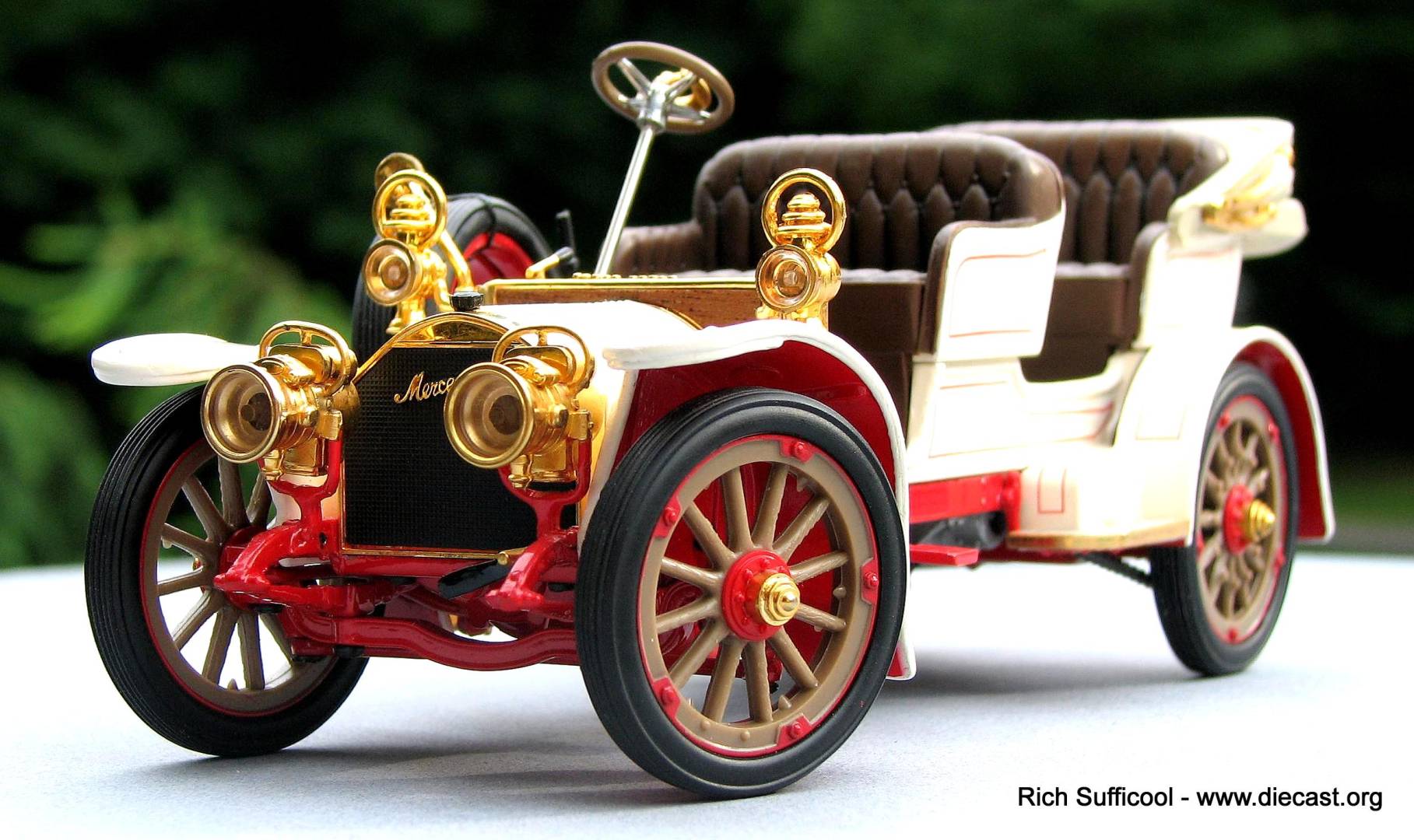
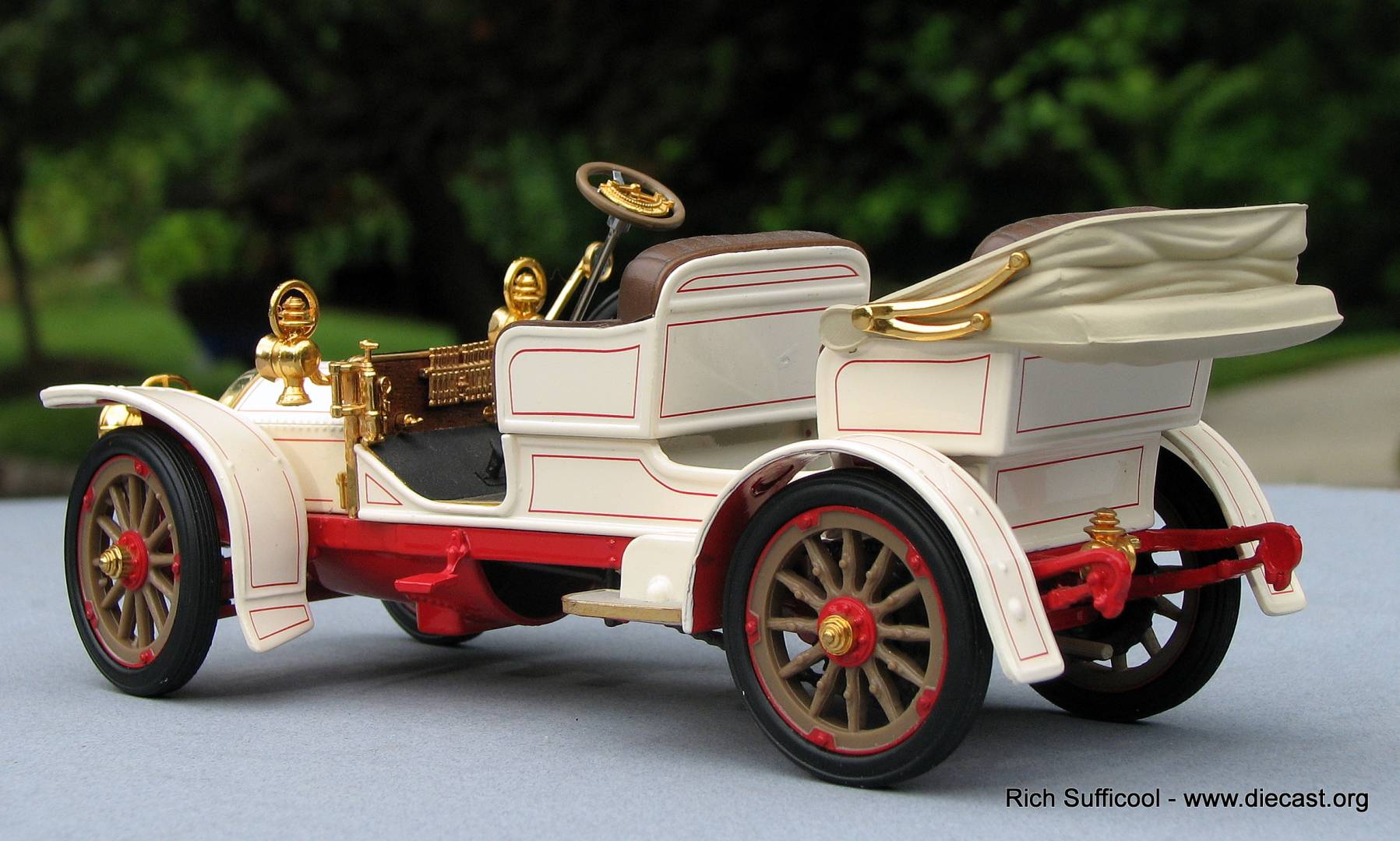
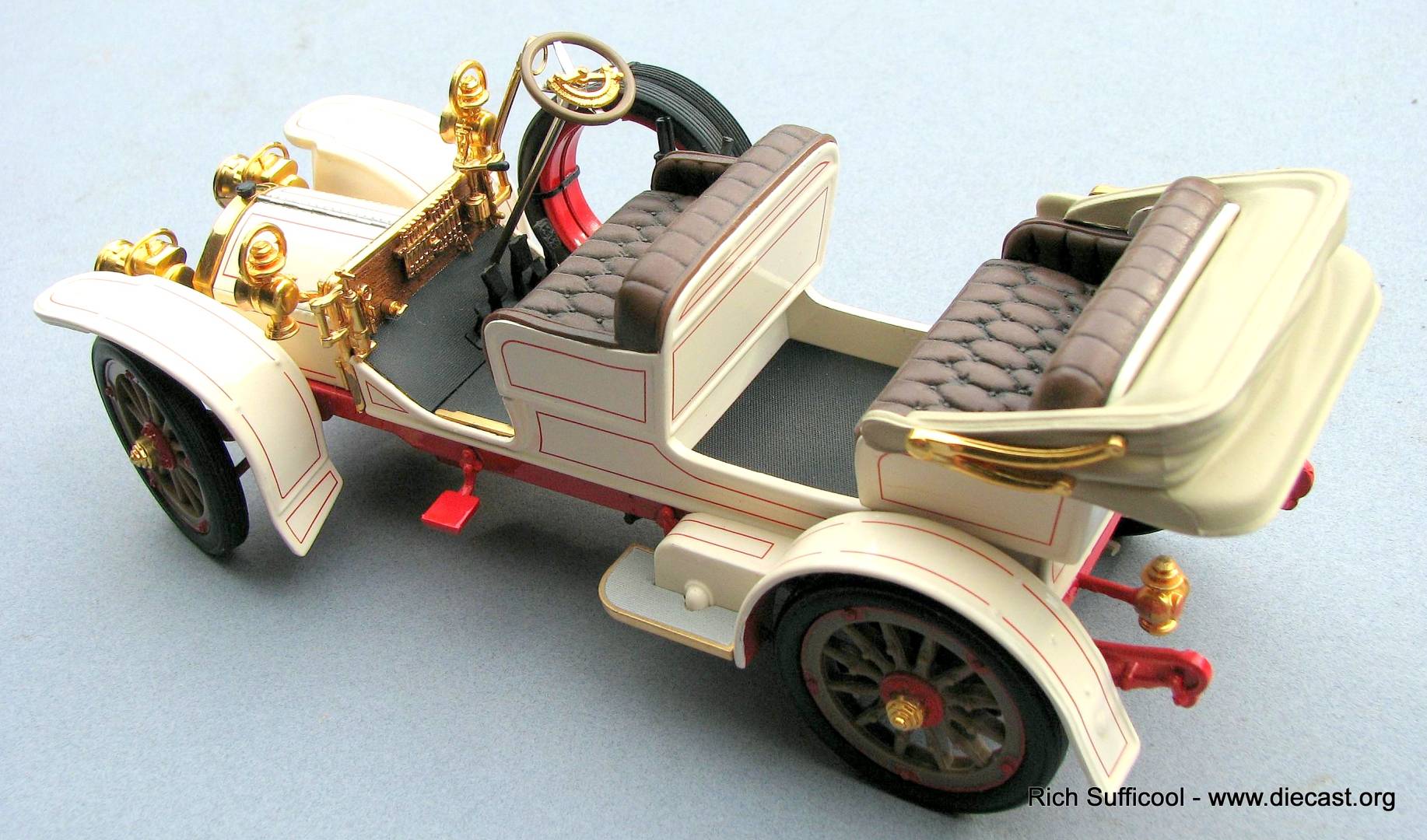
This 1904 Mercedes Simplex was a result of collaboration between designer Wilhelm Maybach and Daimler Motorworks producing this luxury performance automobile also designed for simplicity of operation. No matter who were the engineering brains behind these automobiles, it was Emil Jellinik and his marketing genius that put his stamp on these early Daimlers. The brand "Mercedes" was the name of Emil's oldest daughter and "Simplex", as the model's moniker, stressed both its design and ease of operation. Jellinek was involved in the racing of Mercedes throughout Europe and as a consul to the Austro-Hungarian Empire, he had just connections needed to promote the cars throughout the continent and the US. Starting in 1902 the chain driven 4 cylinder engine produced just under 42 hp. By 1904, Maybach had the engine bumped up to 60 hp with an LSR model at 90 hp. The Simplex had great racing successes on both sides of the pond until production ceased in 1909 and was the darling of Kaiser Wilhelm ll.





26/08/2023 4:04 pm
Hi Rich, this is a great post, and so informative, along with your excellent photographs. I believe there had been an auto accident in the Cannstatt-Daimler during 'hill-trials' around Nice, where a major sales meet was held annually by international manufacturers. And as a result, the Nice sales representative for Daimler insisted upon the name change from Daimler to the suggested Mercedes (Jellinek) - as you mention - to avoid adverse publicity arising from the fatal accident.
Something that has always bothered me is the connection between the Mercedes-Simplex and New York manufacturer, Simplex. Do you know of a connection there, or is this a detail I've misunderstood from your post?
Tony Perrone and David Green reacted

26/08/2023 4:24 pm
Thanks Rich for the wonderful writeup and pictures. I'm glad to have this model in my collection.
Tony Perrone and Charles Rockett reacted
Topic starter
26/08/2023 4:46 pm
@charles-rockett For all I gather, "Simplex" was just a marketing thing that stressed that design aspect. When Kaiser Wilhelm brought Maybach and the Simplex to meet, he joked that 'this engine isn't that simple'.

26/08/2023 6:12 pm
Another wonderful historic post with a great Franklin Mint model photographed. I always look forward to your posts, Rich. Charles, that is fresh information to me regarding the hill climb accident near Nice.
Tony Perrone and Charles Rockett reacted
26/08/2023 6:56 pm
@david-green The stuff I remember is often from long ago and I'll raise matters here as much to clarify existing thoughts with current narratives that do not somehow tally. A book I have had since the 1970s categorically states that Daimler changed the marque's name as a result of their flagship product suffering an infamous road accident during a major trade fair in Nice in which the celebrated driver died. The Cannstatt-Daimler in question had too-high a centre of gravity and rolled over at a turn.
As Rich, (and indeed so too, yourself) was unaware of this, I have since done a spot of digging around and have arrived at the story - from Mercedes' own web archive - that gives brief details but which seem to me, to have a certain spin on the story: as if not wanting to admit to unsafe product even after one hundred years. Here's what they say on the matter..............
A Phoenix [Cannstatt-Daimler] was also the first automobile entered in a race by Emil Jellinek, under the pseudonym of "Mercedes". The name "Mercedes", later to become known worldwide, initially served only as a driver or team name, however, and not as a product or brand name. Jellinek's 12 hp Phoenix racing car was driven in the Nice Week of March 1899 by DMG factory driver Wilhelm Bauer and was victorious in the Nice - Magagnone - Nice race.
Jellinek entered the major motor sport event in Nice for a second time a year later [1900], this time with two Phoenix racing cars which developed 23 hp, an enormous output by the standards of that time. However, with their high center of gravity, short wheelbase and 320 kg engine, the vehicles were difficult to handle. Wilhelm Bauer was killed whilst driving one of the two cars when he collided with a barrier in the Nice - La Turbie hillclimb race.
The outcome of the race caused Emil Jellinek to demand a more powerful, yet lighter and easier-to-handle car from Wilhelm Maybach. With this, the development of the 35 hp Mercedes - the first modern automobile - began.


Tony Perrone and David Green reacted
26/08/2023 7:37 pm
Thank you Charles.
History, unfortunately is often what the writer interprets rather than being strictly factual. It is also often modified to suit different ideologies and sensitivities, but that is another issue not particularly relevant here other than Daimler, like most companies, try to show their products in a positive light.
Your research helps me understand to a better extent the background events, specifically that 1900 crash and Jellinek's 'pressure' leading to that first 35hp Mercedes and the Mercedes brand name. I appreciate your efforts.
Tony Perrone and Charles Rockett reacted
26/08/2023 7:55 pm
@david-green Regarding a rewriting of automotive history - and concerning Mercedes-Benz again - the biggest shocker, certainly for me, was learning that the absolute established fact: Karl Benz and Gottlieb Daimler had created the first internal combustion engines was a complete lie invented by the NSDAP. The first internal combustion engine was built by an Austrian, Siegfried Samuel Marcus and they took the first petrol driven motorcar from a Vienna museum and destroyed it!

Tony Perrone and David Green reacted

26/08/2023 8:37 pm
This one look excellent and the fine write-up gives a very good historical background here too. This is a Franklin Mint 1/24 diecast ? It only shows what a loss it unfortunately was to lose the Mints.
Tony Perrone reacted
26/08/2023 9:46 pm
As you likely know, Siegfried Marcus, while born in what is now Germany, was a Jew, which did not go over well with the Nazis. While he certainly designed the first combustion engine after he moved to Austria using petroleum for use on a vehicle (truck?), that did not go over well with the Nazis who tried to erase his existence.
His 1864 invention date certainly beats other vehicle inventors although the combustion engine itself is likely credited to Belgian, Lenoir in 1859. Of interest, the USA for years recognized George Selden as the inventor in 1872. Selden got the first US patent in 1895.
The same arguments still go on about the invention of the telephone, radio, radar, television etc.
Tony Perrone and Charles Rockett reacted

26/08/2023 11:04 pm
Great thread thank you gentlemen. I find all automobile history interesting but particularly those very early developmental years