An heir to grandfather Joseph's eponymous aperitif fortune, André was a decorated WWl French air ace, a winning race driver for Hispano-Suiza and Bugatti and an intrepid automotive designer and proponent of aerodynamics on coachbuilding. He sold his 4 wheel independent suspension systems and aerodynamic modifications to GM, Ford, Delahaye, Fiat and Alfa Romeo. This project was started with a Hispano-Suiza H6B chassis that he installed his suspension system and built an aerodynamic body for the '32 Paris Auto Show to prove the performance and top speed advantages of aerodynamics. By 1936, he rebodied a stock Ford demonstrating again the benefits of streamlining. Ford bought the car but did nothing with it. Next, he stripped the '32 H-S back to its chassis, and replaced the drivetrain with the H6C 8 liter 6 and 4 speed and proceeded to design a unique streamlined body with the help of Jean Andreau and built by Jacques Saoutchik. He named the car the Xenia, in memory of his late wife. This epitome of late '30s futurism was Dubonnet's personal car; hidden from the Germans in 1940 and reappearing in 1946. I t was bought in the '60s and restored by the French president of the Hispano-Suiza Club and ultimately became part of the Mullin collection.
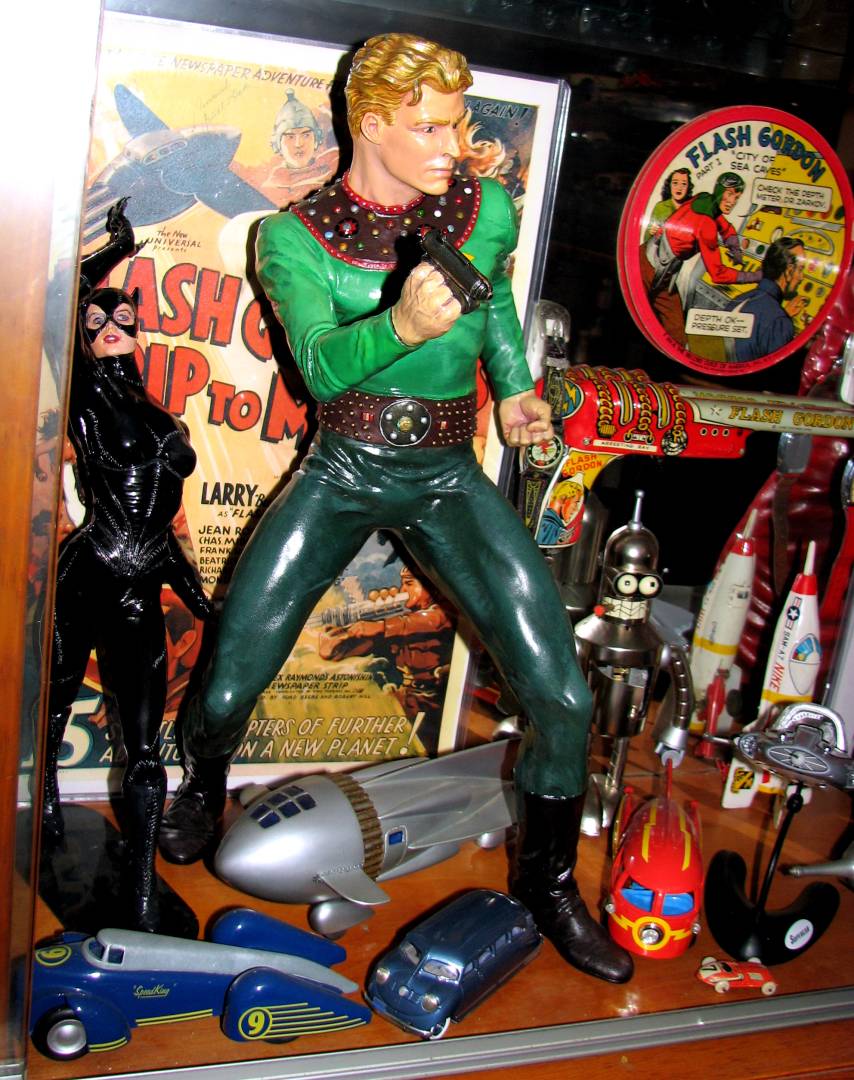
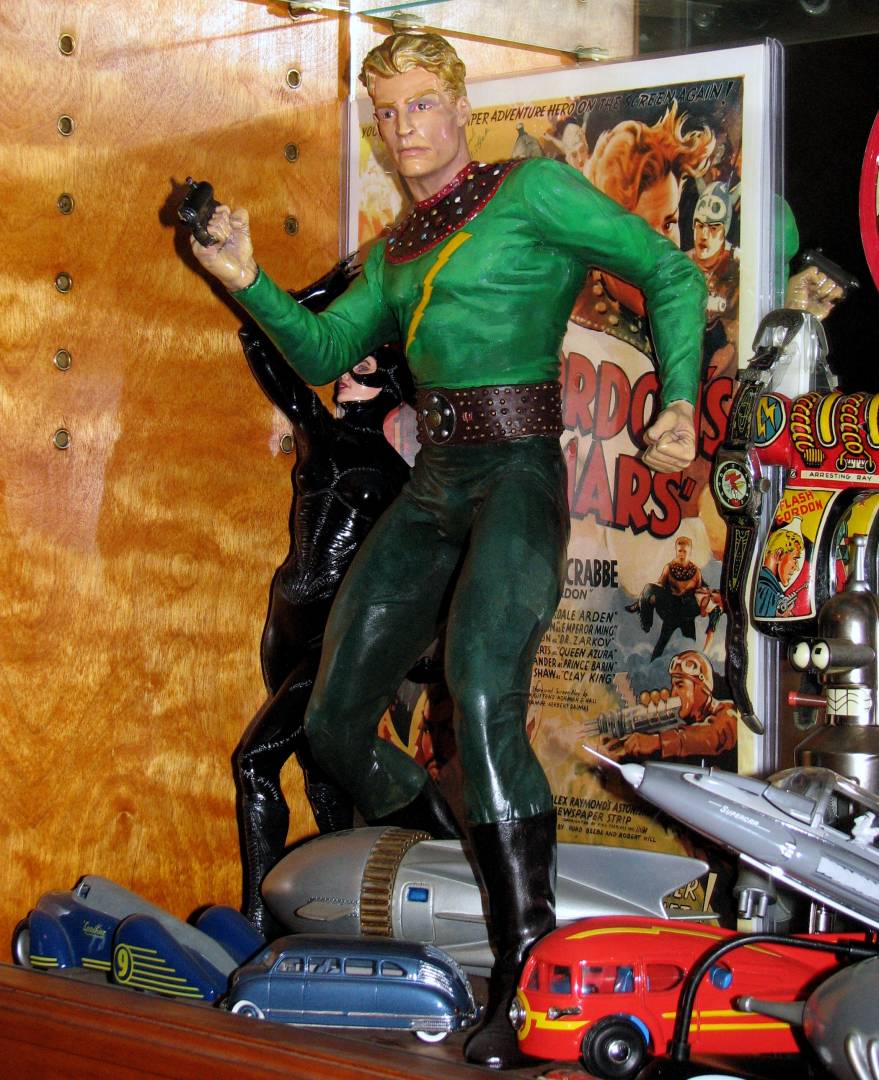
Those 5 degrees of separation leads me right to... Flash Gordon, the classic sci-fi serial. The Xenia has the rounded silver nose of Flash's ship and the tail fins and exhausts of Emperor Ming the Merciless' daily driver.
An heir to grandfather Joseph's eponymous aperitif fortune, André was a decorated WWl French air ace, a winning race driver for Hispano-Suiza and Bugatti and an intrepid automotive designer and proponent of aerodynamics on coachbuilding. He sold his 4 wheel independent suspension systems and aerodynamic modifications to GM, Ford, Delahaye, Fiat and Alfa Romeo. This project was started with a Hispano-Suiza H6B chassis that he installed his suspension system and built an aerodynamic body for the '32 Paris Auto Show to prove the performance and top speed advantages of aerodynamics. By 1936, he rebodied a stock Ford demonstrating again the benefits of streamlining. Ford bought the car but did nothing with it. Next, he stripped the '32 H-S back to its chassis, and replaced the drivetrain with the H6C 8 liter 6 and 4 speed and proceeded to design a unique streamlined body with the help of Jean Andreau and built by Jacques Saoutchik. He named the car the Xenia, in memory of his late wife. This epitome of late '30s futurism was Dubonnet's personal car; hidden from the Germans in 1940 and reappearing in 1946. I t was bought in the '60s and restored by the French president of the Hispano-Suiza Club and ultimately became part of the Mullin collection.
Those 5 degrees of separation leads me right to... Flash Gordon, the classic sci-fi serial. The Xenia has the rounded silver nose of Flash's ship and the tail fins and exhausts of Emperor Ming the Merciless' daily driver.
Wow...dayum...years ago there was a small movie theater that would screen episodes of Flash Gordon and other early movie and tv shorts.
Me and my best buddy from H.S. would go on all-day Saturday shows. Great memories...I really miss those days.